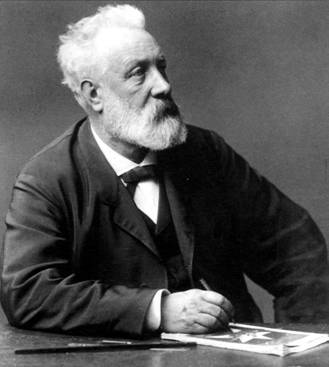
So since our teachers decided to send us off to a remote island ( I won't complain, I loved that "cast away" movie)with only for companions a book, a CD and a person of our choice, I had to decide what would be my best possible options (so many choices, so little choices), here how it goes :
First,the book, it must have been the easiest decision of the entire group, I chose Leo Tolstoy's book "War and peace" I've always wanted to read that one , being heralded as one of the finest piece of literature of all time, carrying the fascinating slavic soul which I relish so much and also famous for it's lenght ( around 1400 pages) I think It's going to keep my days busy on the island, even more so if I read a single page a day with the book in its original language (hopefully these university courses will be useful).
The CD I'd like to bring along with me to the island would be Rischard Desjardin's "Abbittibbi- Chaude était la nuit" CD. This one holds a special place in my heart as it is a CD of nostalgia. I remember the days of summer in my youth, listening to the poetry of Desjardin, thanks to my mother who would always boot that CD up every evening .The titular song ( chaude était la nuit) will always be in my mind, it's a groove I can't forget and I instantly think of these days I've come to miss a bit when the first notes come up( now that we, as cynical adults , lost the wonderfully candid view of the world we used pull around) here's the link to the song: http://www.youtube.com/watch?v=0qvoEFge1RA
Finally, the person I'd like to have around me on the island would be Jules Vernes. I thought about dragging Tom Hanks along with me but ,come to think of it, I don't like volleyball so it's a no-no.Besides, Tom must be so Fedex....errrrr I mean Fed up about being stuck on an island again, I'll just let him stick to running. Jules Vernes would be the more appropriate choice, having read many of his books, I noticed he had a versatile knowledge about virtually anything, and this will come in handy on this island. Plus, Jules Vernes had always been captivated by stories involving people that must survive on a deserted island, so I guess he'll be very satisfied to be stranded with me on these few square kilometres of palm trees, sand and alluring fauna.When you think about it, it's paradise, there's no conservative in sight.......
Wednesday, May 4, 2011
Wednesday, April 6, 2011
BanananananaPhone
the world, tailing ang clinging onto the advancement of new technologies as well as the advent of social networks such as facebook, myspace or twitter, I can see why so many people finds it odd to be called by Phone. I mean, the Phone ! such an outdated way to communicate ! Only the pygmies from the Amazon river in the Sate of Alaska which belongs to The federation of Russia could use such a retarded way to contact people, could they ? besides , the easy and fast access to the web detracts from any desire to pick up the phone and then type the numbers to...... ho wait..... wait !!! this guy, he's single, I know he is , but he isn't on facebook ???? what a twat, now I'll have to look for his phone number in my attic, ho geez. These stairs, these damn stairs, I'll have to go up the stairs and it's a 4 stories house ! I mean I know I had to send my parents to a nursing home (good ridance!) in order to get a hold of all their capital but I mean what crossed their minds when they built this house ??? now I'll have to tell them how much I hate these stairs, Do they have facebook in this damn nursing home ?....
Tuesday, March 22, 2011
the beauty and the Gaddafi
the recent uprising In libya that has been stirinp up worlwide concern for over a month now has certainly reached a climax with the involvement of UN security coucil which has finally decided to allow for the bombing of Gaddafi 's surrounding military targets. What began as a series of Protests in mid February has escalated in a full scale civil war, Still ongoin and raging as we talk.
Casulties are numerous among the civilians and the rebel group who fall victims to the advanced weaponry of Pro-Gaddafi soldiers for which the dated equipment of the rebel army can't hold a candle. Although the rebels' many military victories in the wake of the civil war are nothing short of extraordinary. It wasn't long for Gaddafi to put up desperate measures that were still lying dormant dwelling inside hid bloodthirsty nature. Declaring war to the people Libya, saying he would eliminate anybody that would oppose him. Gaddafi decided to unleash terror,bombing his own citizens without a second thought, feeling the frail pillars of authority about to collapse under his feet.
Once reluctant to interfere in the ongoin conflict. It wasn't long for UN, witnessing the massacre of the population, to participate in the protection of civilian libyans and dispatch the Pro-Gaddafi army. But what will be the price to pay ? We can only say that in the following weeks or months, the history on Libya will be written with the blood of the people, an history that is running crimson with sacrifices. Will it be for the greater good ? let us hope so.
Casulties are numerous among the civilians and the rebel group who fall victims to the advanced weaponry of Pro-Gaddafi soldiers for which the dated equipment of the rebel army can't hold a candle. Although the rebels' many military victories in the wake of the civil war are nothing short of extraordinary. It wasn't long for Gaddafi to put up desperate measures that were still lying dormant dwelling inside hid bloodthirsty nature. Declaring war to the people Libya, saying he would eliminate anybody that would oppose him. Gaddafi decided to unleash terror,bombing his own citizens without a second thought, feeling the frail pillars of authority about to collapse under his feet.
Once reluctant to interfere in the ongoin conflict. It wasn't long for UN, witnessing the massacre of the population, to participate in the protection of civilian libyans and dispatch the Pro-Gaddafi army. But what will be the price to pay ? We can only say that in the following weeks or months, the history on Libya will be written with the blood of the people, an history that is running crimson with sacrifices. Will it be for the greater good ? let us hope so.
Tuesday, February 1, 2011
the puzzling world of languages
I, for one, am not a person who seeks only the goal on intercomprehension when I learn a language as choosing and learning a language merely for its usefulness seems to me like the doom of any and every language. Usefulness doesn't allow any space for diversity and only entitles one to learn what he needs (a necessity rather than an interest) in order to put a crutch beneath his crippled babbling. Let's not cook an egg without its yolk : a language is a world in it's own, we need to learn how to think again with every new one, it's a way to speak, act, react, agree, disagree and so much more, more than the sum of its parts and yet inseparable from any of its intricacies. languages help me to communicate, mostly on the internet, but the opportunity to know one offers me much more, being able to discover new activities or eavesdrop on a conversation between soviet spies for exemple, or read books I couldn't read before. The challenges are many, especially in the first steps you make, you might feel like an idiot that can't lay a word before the other but with effort ( and much , much suffering ) a good footing is only fistfuls of words away and no matter how many speakers there are , every language are equal and worth learning, even that dusty old Latin.
Thursday, December 16, 2010
Gigantic Esperanto lesson -- Grandega Esperanta Leciono
As promised weeks ago, my belated Esperanto lesson is finally here for you to study.And it's going to be one hell of a meaty lesson, if I may say so (sorry,vegans). With this lesson, I'm aiming at helping you understand the "lingchi torture " post I wrote with less difficulty using the grammar rules I'm going to teach you (and a dictionnary). I hope you'll enjoy it.
First step: the pronunciation. There are 28 letters. Piece of cake
C: pronunced as in TSar
Ĉ: pronunced as in TCHekoslovakia
E: pronunced about the same way as in Edible
G: pronunced as in Glove
Ĝ: pronunced as in Giberrish
H: pronunced as in Have
Ĥ: pronunced about the same way as the spanish Jota (gutural r)
J: as the y in You or the same way as the german J
Ĵ: Pronunced as in leiSure (or the same way as the French J)
O: pronunced as in tOne
R: rolled, as in the spanish R
S: pronunced as in Sun
Ŝ: pronunced as in SHip
U: pronunced as in shOOt
Ŭ: pronunced as in Wet
The rest of the letters (a,b,d, f, i, k, l, m, n, p, t, v, z ) are pronunced the same way as in French. q , w, x, y letters don't exist in Esperanto.Esperanto is also a phonetic language, meaning that every letter has only one unique sound and is always pronunced the same way. Vowels( a ,e, i, o, u) are pronunced distinctly in a word and don't mesh with each other to create new sounds, they only do mesh with consonnants to create syllables.
J and Ŭ are considered to be half-vowels as they always mesh with other "true" vowels. Also, the stress is always on the penultimate syllable of a word: GRANda(tall/big), BOna(good), VERda(green), POmo(apple),FIlo(son).
Word endings:
In Esperanto, every noun ends in -O, every adjective ends in -A and every adverb ends in -E. The infinitive form of verbs always ends in -I. To form the plural, one only has to add -J to the ending of any word.
There is no exception to this rule. Exemples:
La verda(j) pomo(j)----- the green apple(s)
La pura(j) akvo(j)------ the clean water(s)
La granda(j) viro(j)------the tall man (men)
Mi manĝas rapide----- I eat quickly
You'll notice that the adjective is inflected in Esperanto, whereas it's not in english. Most of the time, there is no definite word order in the sentences, especially when the accusative case (which we will see later) is
involved in the sentences
Like in english,there is only one definite article in Esperanto (la) and no indefinite article and partitive article at all:
La knabo venis-------the boy came-----------definite
Knabo venis--------a boy came-------------indefinite
Mi volas sukeron----I want (some) sugar (je veux DU sucre)-------partitive
The Pronuns:
Mi: I
Vi: you
Li / Ŝi: he/she
Ĝi: it
Ni: we
Vi: you (plural)
Ili: they
Oni : one ("On" in French)
Si: one self (reflective pronoun)
To make possessive adjectives, you only have to add the -A ending to the Pronouns:
Mia kato estas blanka---- My cat is white.
Via sana frato----- your healthy brother.
Lia forta patro(sed mia estas pli forta !)-----his strong father (but mine is stronger !).
Iliaj arboj--------their trees.
Verbs and declension: so easy you wouldn't believe it:
here are some verbs in the infinitive:
Veni: to come.
Manĝi: to eat.
Soifi: to be thirsty
Vidi: to see.
Rigardi: to look.
Ami: to love.
Fari: to do.
Forgesi: to forget.
Havi: to have
Esti: to be
skribi: to write.
To express the present, all you need to do is replace the -I ending with -AS:
Mi venas: I come.
Ŝi havas: she has.
Ni amas: we love.
....and so on.
The ending for the past is -IS, the future is -OS, the conditionnal is -US and the imperative -U.
Again, there is no exception to this rule, the verbs are always conjugated the same way, no matter the
pronoun. To express the negation, one only have to add NE next to the verb:
Mi ne soifas: I'm not thirsty
li ne estas: he is not
ŝi ne vidos: she won't see.
The accusative:
The Accusative case indicates the direct object in a sentence. Languages such as French and English are almost entirely devoid of the concept of cases to express the roles of the numerous chunks of a sentence, though some remnants of the accusative case can still be found ( Je LE vois/ I see HIM). In Esperanto, we use the -N ending to express the direct object of the sentence, the nouns as well their adjectives undergo the inflection when they act as the direct object. If the direct object is a plural, the -N ending is always added after the -J ending (which expresses the plural):
Li vidis sian filon: he saw his(own) son.
Ni volis rigardi la birdojn : we wanted to look at the birds.
Knaboj amos knabinojn: boys will love girls.
Like I mentionned, the accusative is also useful as it allows you to play with the word order. Exemples using one of the preceding sentences:
Sian filon li vidis / li sian filon vidis/ vidis li sian filon / sian filon vidis li. etc.
They all mean "he saw his ( own) son" though you can build the sentence the way you like without having to worry about what fits where. Warning: Never use the accusative after the verb "to be" (esti) what follows this verb isn't a direct object
To ask a question, use the word ĈU at the beginning of a sentence, the word order isn't affected:
Ĉu vi venos renkonti min ? : will you come see(meet) me ?
Ĉu la kafo estas varma ? : is the coffe hot ?
Ĉu mi povas peti bieron ? : can I ask for some beer ?
Jes: yes
Ne: no
Sed: but
Some useful words and prepositions:
Al: To (indicating a movement or the object *to* which an action *is directed*)
De: Of/from ( indicating the possession or the provenance)
El: out of (movement) Ex: he came out of the house/ from (the origin) Ex: pano el francujo (bread from France)
Kaj: and
Jam: already
Kun: with
Antaŭ (aŭ is pronunced as OW) :Before or ----ago as in "antaŭ tri tagoj" (three days ago)
En: in
The numerals :
As you can see, you only have to mate the basic numerals together to create a whole array of numbers.the numerals and numbers never undergo any inflection ,though the ordinal numbers do. To make any ordinal number you want, add the -A ending to the number:
La unua: the first.
La dua: the second
La tria: the third
La kvara: the fourth
La kvina: the fifth
La deka: the tenth
La dudeka: the twentieth
Same with adverbs:
Unue: firstly
Due: secondly
Trie: thirdly
..............and so on
The Correlatives:
The correlatives in Esperanto is an ingenious linguistic system that lets you use a set of 5 preffixes with a predetermined meaning which can be mated with 9 other suffixes of the same kind. This allows you to learn 45 different words using only 14 distinct affixes that were learned beforehand :
The prefixes:
KI- : what/which
TI-: that
I-: some
Neni-: no
Ĉi-: each/every
The suffixes:
-O: thing
-U:one
-A: kind
-E: place
-El: way
-Al: reason
-Am: time
-Om: quantity
-Es: one's
You get the trick ? mate any of these (one preffix and one suffix) together and you can create all sorts of words:
Kio: what (what thing)
Kiu: who( which one)
Kiam: when (what time)
Neniam: never (no time)
Ĉiu(j): every (all)
Iel: in some way /somehow
Kies: whose
.........and so on. It's brilliant way of learning new words, isn't it ? one only has to know 14 affixes by heart in order to understand 45 different and highly useful meanings.
Note:Only the a,e,o,u endings can undergo inflection, some of wich can only undergo the accusative( o and e) where as the other endings ( a and u) can get both the plural and the accusative. Also, keep in mind that the -O suffixes only expresses an abstract concept, thus it never accompanies a noun (its -U suffix counterpart does).This is also the reason why it never gets the plural:
Kion vi faras ?: what are you doing ?
vi volas manĝi ion: you want to eat something.
..........etc
Also, since the accusative ending can be applied whenever there is a movement to some place, the -E suffix might undergo the inflection:
Kie vi estas ? : where are you ? (no movement)
Kien vi iras? : where do you go/are you going ? (movement---N ending)
Other prepositions :
Ĉe: at, nearby, next to (note the similarity with French's "chez")
Dum: during, while
Ĝis: untill
Por: for, to/in order to
Pro: Because,( for)
Sub: under/below
Sur: on
Super: above
Anstataŭ: instead of
Apud: beside
Da: of (quantity)
Ekster: outside of (no movement)
Inter: between, among
Per: By (by means of) with
Post: after
Pri: about, concerning, regarding
Sen: without
Tra: through
Trans: across, over,on the other side of
Kontraŭ: against
Krom : except for, apart from
Laŭ: along, according to
Malgraŭ: despite
Po: at the rate of
Preter: beyond, past
Je: at (time). Also used whenever any of the other preposition doesn't befit the overall meaning. Ex: I don't believe in God---- mi ne kredas je Dio
Please note that Esperanto is a very precise language, you must not translate your own language's prepositions into Esperanto as its prepositions are used very distinctly.
The Word building:
Another particularity of Esperanto is its word building nature.Being an Agglutinative language, Esperanto lets you mate any stem of its whole vocabulary to create any word you like, you really can go all out if you want.
In addition to this LEGO-like aspect, there are also the 42 basics Affixes which are used very often to extend the vocabulary:
10 prefixes:
Bo- relationship by marriage,-in-law
Dis- dis-, dispersal, separation
Ek- momentary, sudden,commencement,beginning of action
Eks- ex-, former
Fi- shameful, nasty,morally bad,moral degradation,
Ge- of both sexes together
Mal- opposite
Mis- mis-, amiss, wrongly
Pra- remote (time), primordiality,remoteness of relationship,of great antiquity
Re- re-, return, repetition
32 suffixes:
-Aĉ- scorn, disparagement,contemptible, disgusting
-Ad- frequent, repetitiveor habitual action,prolonged action
-Aĵ- thing (concrete idea),a concrete manifestation of an abstraction,
-An- member (of a group),inhabitant (of a place or country)
-Ar- collective, group, set
-Ĉj- pet-name (masculine)
-Ebl- -able, -ible, possibility
-Ec- quality, abstract idea,-ness, -ship
-Eg- augmentative, great size
-Ej- place alloted to or characterized by
-Em- disposition,tendency
-End- to be -ed, which-must-be-done,necessity of action
-Er- item, unit, fragment,small particle of a whole
-Estr- leader, ruler, head, chief
-Et- diminutive
-Ed- offspring, the descendant of
-Ig- to make, to render,to cause
-Iĝ- to become, get
-Il- instrument, means,tool
-In- female, feminine
-Ind- worthiness,worthy to be -ed
-Ing- holder, socket, sheath (for one object)
-Ist- occupation
-Nj- pet-name (feminine)
-Obl- multiple
-On- fraction
-Op- collective
-Uj- container, receptacle
-Ul- person (possesing a certain quality), characterised by
-Um- suffix with an indefinite meaning
The preffixes are always mated to the beginning of a word and the suffixes at the end.It is preferable to remove the ending of a noun and only keep the stem when adding the suffix. Further informations about the affixes here.
Verbs and Participles:
In several languages such as French and English, we often use the past tense to express a conditionnal possibilty/clause: "If I were rich, I'd buy thousands of expensive cars/ Si j'étais riche, je m'achèterais des milliers de voitures onéreuses". However, in Esperanto, we always use the conditional tense in both parts of the clause: Se mi estus riĉa, mi aĉetus milojn da multekostaj aŭtoj.
We also never,ever use the conditional to express a future possibility in the past, unlike in French and English :
Mi kredis, ke ni tien iros : I thought we would go there.
It is very logic when you think about it.
You can also use the imperative with every pronoun you want:
Venu !: come !
Mi venu !: I must come !
Ni trinku !: let's drink !
Ni drinku !: let's drink ! (alcohol)
Ili forgesu !: they must forget !
As you can see, English has only a limited imperative declension whereas Esperanto can conjugate the imperative with every pronoun. At best we can translate the meaning using "must".
Esperanto's participles work using only one auxiliary to express both the active and the passive voice: Esti (to be). there are 3 participles in Esperanto: past participle, present participle and future participle.every participle can act as a noun, an adjective or an adverb depending on the ending.
Active voice:
Present participle: replace -I ending with -ANT-
Past participle: replace -I with -INT-
Future participle: replace-I with -ONT-
Exemples:
Mi estas legANTa libron: I am reading a book
Mi estas kronstruINTa domon: I have built a house
Ŝi estas lavONTa la teleraron: she is about to wash the dishes
Passive voice:
same process, only this time, Remove the N of the endings:
La domo estas konstruATa: the house is (being) built
La pordo estas fermITa : the door is (already) closed
La Bovaĵo estas manĝOTa: the beef meat is about to be eaten
as you noticed, the participles act as adjectives in this case (-A ending), meaning they will also undergo any inflection.you can also alter the ending of any participle at will:
La LegontOJ---- the persons that are about to read
La KreintO----- the creator (he has alreadt created something)
La kuirantO----- the person who is cooking something
Legante la libron, mi ekdormis----- I fell asleep reading the book
you can even add the suffixes we have seen for even more precision:
La legonto--- La legontINo----- the GIRL who is about to read (-IN_ suffixes---expresses feminine counterpart)
La manĝatAĴo----the thing(object, animal) that is being eaten
Using every tenses of the auxiliary "esti" along with the participles,you can describe any given situation with great details, though we tend to use simpler form to express ourselves orally. Partciples are not uncommon in the written language.
More useful prepositions and basic words:
Ĉirkaŭ: around (around 5 minutes / around the world)
Jen: here (as in "here is my blog post)
Tuj: at once/immediately
Ĵus: just ( as in "I've just finished)
Do: then/therefore ( just like French's "donc")
Ankoraŭ: still/yet ( same as French's "encore")
Apenaŭ: hardly/barely ( à peine...)
Baldaŭ: soon (bientôt)
Hieraŭ : yesterday (hier)
Hodiaŭ: today
Morgaŭ : tommorow
Preskaŭ: almost (presque)
Ambaŭ: both
Ankaŭ: also/too (next to the word it stresses)
Ĉi: indicates a proximity ( tie--- there/ (ĉi) tie (ĉi)------here// Tiu knabo---- that boy/ (ĉi) tiu (ĉi) knabo----this boy(here)
Ajn: Any ( kie---where/kie ajn----- wherever)
Ekde: (actually Ek- prefix + de = since)
Nur: only
Ol: than
Tre: very
Tro: too/too much
Pli: more
Plej: most/the most
plu: further/more
Nu: well (expression as in "well , I have to go")
There is/are: estas ( estas kvin aŭtoj----- there are 5 cars)
Don't forget that Esperanto lets you play with it, you can tranform any word you like into a noun, a verb, an adjective or an adverb:
la knabo estas sana: the boy is healthy
La knabo sanas: the boys is healthy/ well
La knabo havas bonan sanon: the boy has a good health
Mi ofte promenas nokte: I often take a stroll at night
mi vekiĝis (veki--to wake up(someone)/ veki +IĜ suffix----to wake up (become awake)) posttagmeze(post+ tago +mezo) ---I woke up in the afternoon.
Your imagination is the only limit----- Nur via imago estas la limo.
Some useful sentences:
Nu, mi esperas, ke tiu ĉi grandega kaj intrua leciono plaĉis al vi kaj ankaŭ Esperantuligos vin. Mi bezonis laboradi dum ok horoj por finfine ĝin al vi oferi.
Jen estas iuj ajn ligiloj por helpi vin plulerni pri la lingvo(here are some links to help your further learn about the language):
http://esperantofre.com/eeo/EoDktA/KorKurA1.htm
http://fr.lernu.net/
Vortaroj(dictionnaries):
http://www.majstro.com/Web/Majstro/dict.php
http://www.esperanto-panorama.net/vortaro/eoen.htm
My (crappy) email and messenger adress if ever any of you wants to chat with me in Esperanto: snakeeater400@hotmail.com
Feliĉan kristnaskon al ĉiuj kaj adiaŭ ! ( merry christmas to everybody and goodbye !)
First step: the pronunciation. There are 28 letters. Piece of cake
C: pronunced as in TSar
Ĉ: pronunced as in TCHekoslovakia
E: pronunced about the same way as in Edible
G: pronunced as in Glove
Ĝ: pronunced as in Giberrish
H: pronunced as in Have
Ĥ: pronunced about the same way as the spanish Jota (gutural r)
J: as the y in You or the same way as the german J
Ĵ: Pronunced as in leiSure (or the same way as the French J)
O: pronunced as in tOne
R: rolled, as in the spanish R
S: pronunced as in Sun
Ŝ: pronunced as in SHip
U: pronunced as in shOOt
Ŭ: pronunced as in Wet
The rest of the letters (a,b,d, f, i, k, l, m, n, p, t, v, z ) are pronunced the same way as in French. q , w, x, y letters don't exist in Esperanto.Esperanto is also a phonetic language, meaning that every letter has only one unique sound and is always pronunced the same way. Vowels( a ,e, i, o, u) are pronunced distinctly in a word and don't mesh with each other to create new sounds, they only do mesh with consonnants to create syllables.
J and Ŭ are considered to be half-vowels as they always mesh with other "true" vowels. Also, the stress is always on the penultimate syllable of a word: GRANda(tall/big), BOna(good), VERda(green), POmo(apple),FIlo(son).
Word endings:
In Esperanto, every noun ends in -O, every adjective ends in -A and every adverb ends in -E. The infinitive form of verbs always ends in -I. To form the plural, one only has to add -J to the ending of any word.
There is no exception to this rule. Exemples:
La verda(j) pomo(j)----- the green apple(s)
La pura(j) akvo(j)------ the clean water(s)
La granda(j) viro(j)------the tall man (men)
Mi manĝas rapide----- I eat quickly
You'll notice that the adjective is inflected in Esperanto, whereas it's not in english. Most of the time, there is no definite word order in the sentences, especially when the accusative case (which we will see later) is
involved in the sentences
Like in english,there is only one definite article in Esperanto (la) and no indefinite article and partitive article at all:
La knabo venis-------the boy came-----------definite
Knabo venis--------a boy came-------------indefinite
Mi volas sukeron----I want (some) sugar (je veux DU sucre)-------partitive
The Pronuns:
Mi: I
Vi: you
Li / Ŝi: he/she
Ĝi: it
Ni: we
Vi: you (plural)
Ili: they
Oni : one ("On" in French)
Si: one self (reflective pronoun)
To make possessive adjectives, you only have to add the -A ending to the Pronouns:
Mia kato estas blanka---- My cat is white.
Via sana frato----- your healthy brother.
Lia forta patro(sed mia estas pli forta !)-----his strong father (but mine is stronger !).
Iliaj arboj--------their trees.
Verbs and declension: so easy you wouldn't believe it:
here are some verbs in the infinitive:
Veni: to come.
Manĝi: to eat.
Soifi: to be thirsty
Vidi: to see.
Rigardi: to look.
Ami: to love.
Fari: to do.
Forgesi: to forget.
Havi: to have
Esti: to be
skribi: to write.
To express the present, all you need to do is replace the -I ending with -AS:
Mi venas: I come.
Ŝi havas: she has.
Ni amas: we love.
....and so on.
The ending for the past is -IS, the future is -OS, the conditionnal is -US and the imperative -U.
Again, there is no exception to this rule, the verbs are always conjugated the same way, no matter the
pronoun. To express the negation, one only have to add NE next to the verb:
Mi ne soifas: I'm not thirsty
li ne estas: he is not
ŝi ne vidos: she won't see.
The accusative:
The Accusative case indicates the direct object in a sentence. Languages such as French and English are almost entirely devoid of the concept of cases to express the roles of the numerous chunks of a sentence, though some remnants of the accusative case can still be found ( Je LE vois/ I see HIM). In Esperanto, we use the -N ending to express the direct object of the sentence, the nouns as well their adjectives undergo the inflection when they act as the direct object. If the direct object is a plural, the -N ending is always added after the -J ending (which expresses the plural):
Li vidis sian filon: he saw his(own) son.
Ni volis rigardi la birdojn : we wanted to look at the birds.
Knaboj amos knabinojn: boys will love girls.
Like I mentionned, the accusative is also useful as it allows you to play with the word order. Exemples using one of the preceding sentences:
Sian filon li vidis / li sian filon vidis/ vidis li sian filon / sian filon vidis li. etc.
They all mean "he saw his ( own) son" though you can build the sentence the way you like without having to worry about what fits where. Warning: Never use the accusative after the verb "to be" (esti) what follows this verb isn't a direct object
To ask a question, use the word ĈU at the beginning of a sentence, the word order isn't affected:
Ĉu vi venos renkonti min ? : will you come see(meet) me ?
Ĉu la kafo estas varma ? : is the coffe hot ?
Ĉu mi povas peti bieron ? : can I ask for some beer ?
Jes: yes
Ne: no
Sed: but
Some useful words and prepositions:
Al: To (indicating a movement or the object *to* which an action *is directed*)
De: Of/from ( indicating the possession or the provenance)
El: out of (movement) Ex: he came out of the house/ from (the origin) Ex: pano el francujo (bread from France)
Kaj: and
Jam: already
Kun: with
Antaŭ (aŭ is pronunced as OW) :Before or ----ago as in "antaŭ tri tagoj" (three days ago)
En: in
The numerals :
| 1 | unu | 11 | dek unu | 31 | tridek unu | 100 | cent |
| 2 | du | 12 | dek du | 32 | tridek du | 200 | ducent |
| 3 | tri | 13 | dek tri | .. | ....... | 1000 | mil |
| 4 | kvar | 14 | dek kvar | .. | ....... | .. | ....... |
| 5 | kvin | .. | ....... | 40 | kvardek | ||
| 6 | ses | .. | ....... | 50 | kvindek | ||
| 7 | sep | 20 | dudek | 60 | sesdek | ||
| 8 | ok | 21 | dudek unu | 70 | sepdek | ||
| 9 | naŭ | .. | ....... | 80 | okdek | ||
| 10 | dek | 30 | tridek | 90 | nauxdek |
| 1998 | mil naŭcent naŭdek ok |
| 749 | sepcent kvardek naŭ |
| 1515 | mil kvincent dek kvin |
| 2051 | du mil kvindek unu |
As you can see, you only have to mate the basic numerals together to create a whole array of numbers.the numerals and numbers never undergo any inflection ,though the ordinal numbers do. To make any ordinal number you want, add the -A ending to the number:
La unua: the first.
La dua: the second
La tria: the third
La kvara: the fourth
La kvina: the fifth
La deka: the tenth
La dudeka: the twentieth
Same with adverbs:
Unue: firstly
Due: secondly
Trie: thirdly
..............and so on
The Correlatives:
The correlatives in Esperanto is an ingenious linguistic system that lets you use a set of 5 preffixes with a predetermined meaning which can be mated with 9 other suffixes of the same kind. This allows you to learn 45 different words using only 14 distinct affixes that were learned beforehand :
The prefixes:
KI- : what/which
TI-: that
I-: some
Neni-: no
Ĉi-: each/every
The suffixes:
-O: thing
-U:one
-A: kind
-E: place
-El: way
-Al: reason
-Am: time
-Om: quantity
-Es: one's
You get the trick ? mate any of these (one preffix and one suffix) together and you can create all sorts of words:
Kio: what (what thing)
Kiu: who( which one)
Kiam: when (what time)
Neniam: never (no time)
Ĉiu(j): every (all)
Iel: in some way /somehow
Kies: whose
.........and so on. It's brilliant way of learning new words, isn't it ? one only has to know 14 affixes by heart in order to understand 45 different and highly useful meanings.
Note:Only the a,e,o,u endings can undergo inflection, some of wich can only undergo the accusative( o and e) where as the other endings ( a and u) can get both the plural and the accusative. Also, keep in mind that the -O suffixes only expresses an abstract concept, thus it never accompanies a noun (its -U suffix counterpart does).This is also the reason why it never gets the plural:
Kion vi faras ?: what are you doing ?
vi volas manĝi ion: you want to eat something.
..........etc
Also, since the accusative ending can be applied whenever there is a movement to some place, the -E suffix might undergo the inflection:
Kie vi estas ? : where are you ? (no movement)
Kien vi iras? : where do you go/are you going ? (movement---N ending)
Other prepositions :
Ĉe: at, nearby, next to (note the similarity with French's "chez")
Dum: during, while
Ĝis: untill
Por: for, to/in order to
Pro: Because,( for)
Sub: under/below
Sur: on
Super: above
Anstataŭ: instead of
Apud: beside
Da: of (quantity)
Ekster: outside of (no movement)
Inter: between, among
Per: By (by means of) with
Post: after
Pri: about, concerning, regarding
Sen: without
Tra: through
Trans: across, over,on the other side of
Kontraŭ: against
Krom : except for, apart from
Laŭ: along, according to
Malgraŭ: despite
Po: at the rate of
Preter: beyond, past
Je: at (time). Also used whenever any of the other preposition doesn't befit the overall meaning. Ex: I don't believe in God---- mi ne kredas je Dio
Please note that Esperanto is a very precise language, you must not translate your own language's prepositions into Esperanto as its prepositions are used very distinctly.
The Word building:
Another particularity of Esperanto is its word building nature.Being an Agglutinative language, Esperanto lets you mate any stem of its whole vocabulary to create any word you like, you really can go all out if you want.
In addition to this LEGO-like aspect, there are also the 42 basics Affixes which are used very often to extend the vocabulary:
10 prefixes:
Bo- relationship by marriage,-in-law
Dis- dis-, dispersal, separation
Ek- momentary, sudden,commencement,beginning of action
Eks- ex-, former
Fi- shameful, nasty,morally bad,moral degradation,
Ge- of both sexes together
Mal- opposite
Mis- mis-, amiss, wrongly
Pra- remote (time), primordiality,remoteness of relationship,of great antiquity
Re- re-, return, repetition
32 suffixes:
-Aĉ- scorn, disparagement,contemptible, disgusting
-Ad- frequent, repetitiveor habitual action,prolonged action
-Aĵ- thing (concrete idea),a concrete manifestation of an abstraction,
-An- member (of a group),inhabitant (of a place or country)
-Ar- collective, group, set
-Ĉj- pet-name (masculine)
-Ebl- -able, -ible, possibility
-Ec- quality, abstract idea,-ness, -ship
-Eg- augmentative, great size
-Ej- place alloted to or characterized by
-Em- disposition,tendency
-End- to be -ed, which-must-be-done,necessity of action
-Er- item, unit, fragment,small particle of a whole
-Estr- leader, ruler, head, chief
-Et- diminutive
-Ed- offspring, the descendant of
-Ig- to make, to render,to cause
-Iĝ- to become, get
-Il- instrument, means,tool
-In- female, feminine
-Ind- worthiness,worthy to be -ed
-Ing- holder, socket, sheath (for one object)
-Ist- occupation
-Nj- pet-name (feminine)
-Obl- multiple
-On- fraction
-Op- collective
-Uj- container, receptacle
-Ul- person (possesing a certain quality), characterised by
-Um- suffix with an indefinite meaning
The preffixes are always mated to the beginning of a word and the suffixes at the end.It is preferable to remove the ending of a noun and only keep the stem when adding the suffix. Further informations about the affixes here.
Verbs and Participles:
In several languages such as French and English, we often use the past tense to express a conditionnal possibilty/clause: "If I were rich, I'd buy thousands of expensive cars/ Si j'étais riche, je m'achèterais des milliers de voitures onéreuses". However, in Esperanto, we always use the conditional tense in both parts of the clause: Se mi estus riĉa, mi aĉetus milojn da multekostaj aŭtoj.
We also never,ever use the conditional to express a future possibility in the past, unlike in French and English :
Mi kredis, ke ni tien iros : I thought we would go there.
It is very logic when you think about it.
You can also use the imperative with every pronoun you want:
Venu !: come !
Mi venu !: I must come !
Ni trinku !: let's drink !
Ni drinku !: let's drink ! (alcohol)
Ili forgesu !: they must forget !
As you can see, English has only a limited imperative declension whereas Esperanto can conjugate the imperative with every pronoun. At best we can translate the meaning using "must".
Esperanto's participles work using only one auxiliary to express both the active and the passive voice: Esti (to be). there are 3 participles in Esperanto: past participle, present participle and future participle.every participle can act as a noun, an adjective or an adverb depending on the ending.
Active voice:
Present participle: replace -I ending with -ANT-
Past participle: replace -I with -INT-
Future participle: replace-I with -ONT-
Exemples:
Mi estas legANTa libron: I am reading a book
Mi estas kronstruINTa domon: I have built a house
Ŝi estas lavONTa la teleraron: she is about to wash the dishes
Passive voice:
same process, only this time, Remove the N of the endings:
La domo estas konstruATa: the house is (being) built
La pordo estas fermITa : the door is (already) closed
La Bovaĵo estas manĝOTa: the beef meat is about to be eaten
as you noticed, the participles act as adjectives in this case (-A ending), meaning they will also undergo any inflection.you can also alter the ending of any participle at will:
La LegontOJ---- the persons that are about to read
La KreintO----- the creator (he has alreadt created something)
La kuirantO----- the person who is cooking something
Legante la libron, mi ekdormis----- I fell asleep reading the book
you can even add the suffixes we have seen for even more precision:
La legonto--- La legontINo----- the GIRL who is about to read (-IN_ suffixes---expresses feminine counterpart)
La manĝatAĴo----the thing(object, animal) that is being eaten
Using every tenses of the auxiliary "esti" along with the participles,you can describe any given situation with great details, though we tend to use simpler form to express ourselves orally. Partciples are not uncommon in the written language.
More useful prepositions and basic words:
Ĉirkaŭ: around (around 5 minutes / around the world)
Jen: here (as in "here is my blog post)
Tuj: at once/immediately
Ĵus: just ( as in "I've just finished)
Do: then/therefore ( just like French's "donc")
Ankoraŭ: still/yet ( same as French's "encore")
Apenaŭ: hardly/barely ( à peine...)
Baldaŭ: soon (bientôt)
Hieraŭ : yesterday (hier)
Hodiaŭ: today
Morgaŭ : tommorow
Preskaŭ: almost (presque)
Ambaŭ: both
Ankaŭ: also/too (next to the word it stresses)
Ĉi: indicates a proximity ( tie--- there/ (ĉi) tie (ĉi)------here// Tiu knabo---- that boy/ (ĉi) tiu (ĉi) knabo----this boy(here)
Ajn: Any ( kie---where/kie ajn----- wherever)
Ekde: (actually Ek- prefix + de = since)
Nur: only
Ol: than
Tre: very
Tro: too/too much
Pli: more
Plej: most/the most
plu: further/more
Nu: well (expression as in "well , I have to go")
There is/are: estas ( estas kvin aŭtoj----- there are 5 cars)
Don't forget that Esperanto lets you play with it, you can tranform any word you like into a noun, a verb, an adjective or an adverb:
la knabo estas sana: the boy is healthy
La knabo sanas: the boys is healthy/ well
La knabo havas bonan sanon: the boy has a good health
Mi ofte promenas nokte: I often take a stroll at night
mi vekiĝis (veki--to wake up(someone)/ veki +IĜ suffix----to wake up (become awake)) posttagmeze(post+ tago +mezo) ---I woke up in the afternoon.
Your imagination is the only limit----- Nur via imago estas la limo.
Some useful sentences:
| Hello! | Saluton! | |
| Welcome! | Bonvenon! | |
| Good morning. | Bonan matenon. | |
| Good day. | Bonan tagon. | |
| Good night. | Bonan nokton. | |
| Thank you. | Dankon. |
| ||||||||
Jen estas iuj ajn ligiloj por helpi vin plulerni pri la lingvo(here are some links to help your further learn about the language):
http://esperantofre.com/eeo/EoDktA/KorKurA1.htm
http://fr.lernu.net/
Vortaroj(dictionnaries):
http://www.majstro.com/Web/Majstro/dict.php
http://www.esperanto-panorama.net/vortaro/eoen.htm
My (crappy) email and messenger adress if ever any of you wants to chat with me in Esperanto: snakeeater400@hotmail.com
Feliĉan kristnaskon al ĉiuj kaj adiaŭ ! ( merry christmas to everybody and goodbye !)
Thursday, November 18, 2010
Language demonstration 1
I've recently decided I'd use this blog to introduce the visitors to some languages they might no know about. I'm simply going to write texts in the languages I choose along with lessons (I will post them shortly after, separately from the texts) for the visitors to study in order to be able to translate the texts on their own, ( if they are interested, of course).
I was planning to introduce my fellow classmates to Latin with an article about space conquest I'd write myself, but it proved more difficult than I thought as Latin and modern world hardly mate together efficiently ( I have to look up for or create neologisms on my own). I'll have to resort to a language I'm more comfortable with for this week but I promise it won't be long for latin to come up on my blog :)
this week's article is going to be about an infamous Chinese torture: Lingchi (not for the faint of heart) and written in Esperanto:
PS: Esperanto lesson tommorow or the day after :)
I was planning to introduce my fellow classmates to Latin with an article about space conquest I'd write myself, but it proved more difficult than I thought as Latin and modern world hardly mate together efficiently ( I have to look up for or create neologisms on my own). I'll have to resort to a language I'm more comfortable with for this week but I promise it won't be long for latin to come up on my blog :)
this week's article is going to be about an infamous Chinese torture: Lingchi (not for the faint of heart) and written in Esperanto:
"Lingĉi", aŭ ada membrotranĉadaĉo:
La torturo, kiu nomiĝas "Lingĉi" estis ĉina Torturo uzata ek de la deka jarcento ĝis la dudeka jarcento ( do dum mil jaroj) kiel manieron puni tri specojn da krimuloj : Tiujn, kiujn krimis kontraŭ la imperiestro (ciaĵ ajn ribelulojn aŭ konspirulojn, kontraŭ ilia patrema familio aŭ ciajn aliajn krimulojn, kies gravaj fimalbonfaroj estas punendaj.
Tiu torturo estis nomata ankaŭ, kiel la "oktranĉila kondamno" pro la ok tranĉiloj, kiujn estis uzataj dum la tuta torturo: la edzekutisto havis korbon, kiu enhavis la ok fimurderilojn. Ĉiu tranĉilo taŭgis por aparta celo:la edzekutisto elkorbigis ĉiun el ili unu post la alia.
-La unua tranĉilo devis tranĉi la bruston (aŭ mamojn)
-la dua la bicepsojn
-la tria la femurojn
-la kvara kaj kvina la kubutojn
-la sesa kaj sepa la genuojn
-la oka kaj, finfine, lasta la kapon.
La edzekutoto estis ĉiam ligita je polo tiel, kiel li ne povis movi dum sia ada sangelfluigado.Li estis ofte ankaŭ drogita por travivi la longan torturon.Unufoje ke la torturo estis finita, la tranĉitaj membroj kaj kapo estis publike eksponataj.
Feliĉe, oni tiun fiagadon abolis en la mil naŭcent kvina jaro, sed dum mil jaroj, ĝi perterure reĝis degutigante la sangon de miloj sub sangosoifintaj glavoj....
PS: Esperanto lesson tommorow or the day after :)
Wednesday, November 3, 2010
The Mothman.
The Mothman : only the mere mention of its name might still strike fear in the heart of the residents of west-virginia even a half century after the uncanny events surrounding its appearance. For almost one whole year, commencing from november 12 1967, the residents of a small city named Point Pleasant experienced terror as the sighting of this tall creatures with moth wings and glowing red eyes were reported by many throughout a period of 11 months.
The creature,allegedly,even went as far as taking chase of people's car on the countryside road, flying as fast as 100 miles per hours, easily following the few terrified motorists that weren't lucky enough to avoid the the scare of their life. The reasons for such a gruesome creature to show itself to the poor fellows of Point Pleasant still remain unanswered, albeit one thing for sure it that the creature was never heard of again after the collapse of the Silver Bridge in the night of december 16 1967 that connected Point Pleasant to the city of Gallipolis, Ohio, and that resulted in the death of 46 persons.
Was the The Mothman trying to Warn the townspeople from the upcoming disaster ? The mystery is still vivid...
The creature,allegedly,even went as far as taking chase of people's car on the countryside road, flying as fast as 100 miles per hours, easily following the few terrified motorists that weren't lucky enough to avoid the the scare of their life. The reasons for such a gruesome creature to show itself to the poor fellows of Point Pleasant still remain unanswered, albeit one thing for sure it that the creature was never heard of again after the collapse of the Silver Bridge in the night of december 16 1967 that connected Point Pleasant to the city of Gallipolis, Ohio, and that resulted in the death of 46 persons.
Was the The Mothman trying to Warn the townspeople from the upcoming disaster ? The mystery is still vivid...
Subscribe to:
Posts (Atom)